There is certainly no shortage of technology in modern marketing organisations. Data is being collected from an ever-growing number of sources. Platforms promise better personalisation, automation and customer insights. And with AI, the possibilities have expanded even further.
At the same time, however, the risk is growing that organisations end up with a martech stack that is larger and more complex than they can realistically extract value from. For Rasmus, a good martech stack is therefore not necessarily the biggest. Above all, it must be able to create value for both the business and its customers.
“So you have to ask yourself: What is it we really want to achieve, and who do we want to achieve it for?”
Growth changes when acquiring new members is no longer enough
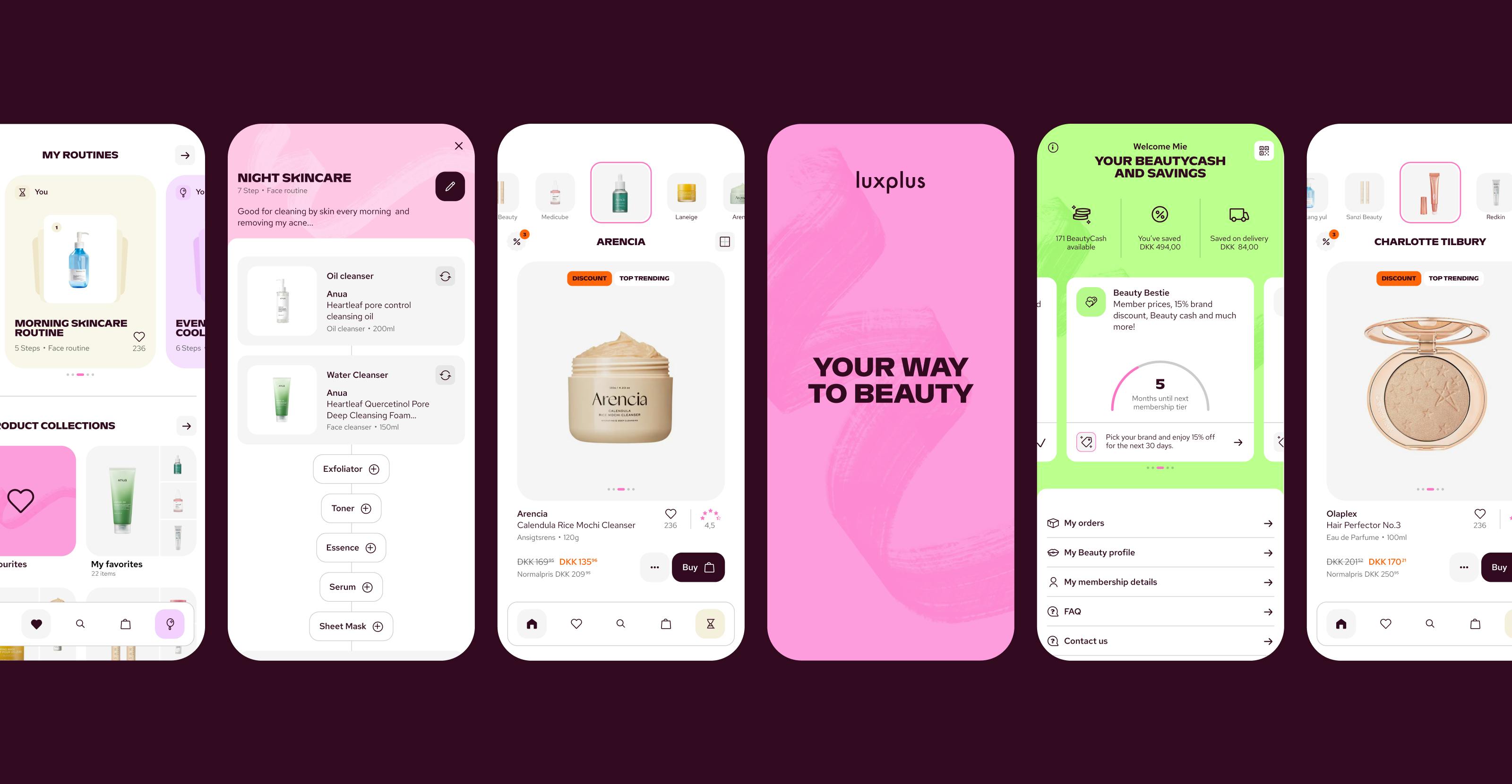
Like many other subscription businesses, Luxplus has reached a point where optimising for new member acquisition is no longer enough. The focus has increasingly shifted towards three priorities at once: acquiring members efficiently, activating them earlier and more frequently, and retaining them by making the everyday value of membership more tangible.
This is the starting point for the app project: a strong membership should deliver value every week, not just during campaigns. Member prices, free shipping, loyalty benefits and relevant inspiration should be available between major sales events, not just during them.
When technology solves the wrong problem
Martech investments are often treated as technology projects rather than business projects. When a company is dissatisfied with how its business is performing, it is tempting to believe that new systems will provide the solution. But new systems do not automatically transform a business. The first question should be what the company wants to achieve and what value it wants to create for its customers. Only then does it make sense to look at the technology.
It is also possible to buy too much. A clear sign is platforms that are barely used or can only be operated by a handful of employees who already have many other responsibilities. This is particularly common when large technology suites come bundled with additional features.
“If all it does is add more platforms to log into, with no one having the skills or time to get to grips with them, then the martech stack has simply become too big.”
That is why the goal is not necessarily to build the most sophisticated setup. Sometimes, the value lies in making technology more accessible through simpler interfaces that more employees can use in their day-to-day work, rather than presenting them with a complex interface for an already complex product.
This is also an important consideration when developing digital solutions: How do you make it easy for users to navigate and complete their tasks without making the experience more complicated than necessary?
Start with the right data, not all the data
The same principle applies when the ambition is to become more data-driven and deliver greater personalisation. For companies with limited resources, it can be tempting to launch a large-scale data project aimed at getting all data from all sources under control. But according to Rasmus, this risks becoming an IT project that never ends. Instead, companies should identify the most important touchpoints in the customer journey, the so-called moments of truth, and make sure they capture data at precisely those points.
“You shouldn’t start a data project where you have to manage all data from every source indefinitely. Because then you end up with an IT project that never ends.”
It doesn’t have to be complicated. Sometimes, the most valuable information is simply something the company asks the customer directly.
Rasmus highlights BabySam as an example. Information such as a baby’s due date and gender can give the company a strong starting point for tailoring its communications to the customer’s situation and needs. The point is that a relatively small number of relevant data points can unlock a wide range of personalisation opportunities, without the company having to collect everything about everyone.
Personalisation and AI require more than technology
More personalisation does not necessarily mean better personalisation. The problem arises when companies use data in ways that customers do not expect. Legal consent may be in place, but that does not necessarily mean customers experience the communication as natural. Rasmus calls this “emotional consent”.
“You can have legal consent in place, but if emotional consent is missing, you can still run into problems.”
The same applies to AI. Generative AI can create content and work with new types of data, while agentic AI makes it possible to interact directly with systems. But Rasmus warns against being dazzled by demos.
“A technology provider may be able to quickly build something that looks impressive in a demo. But creating something that genuinely works and is sufficiently granular and precise still requires domain expertise.”
AI can easily produce an average of what already exists. Creating a solution that truly stands out requires people who understand the customers, the market and the field of expertise.
The Next Big Thing in Martech?
If there is one development companies should keep an eye on, Rasmus points in particular to voice. Not simply as a new way to give commands to technology, but as a new way to interact with both AI agents and business systems.
Imagine an agent that, as you head home from work, tells you what has happened across your company’s platforms throughout the day while suggesting what should happen next. In the longer term, consumers may also have their own agents that understand their preferences and filter the communications they are willing to be exposed to in the first place. This could change the rules of marketing. If a customer’s own agent starts filtering communications, having something relevant to say becomes even more important.
And perhaps that is the most important takeaway from the entire evolution of martech:
It’s not about getting more technology. It’s about using technology to solve the right problems.